NEW WAY OF LEARNING SPOKEN GERMAN IN 90 DAYS IN SWITZERLAND
HAVE REAL GERMAN
CONVERSATIONS
BY NOVEMBER

WE'RE ON THE MISSION TO HELP 7 INTERNATIONALS IN SWITZERLAND, TO SPEAK FLUID CONVERSATIONAL GERMAN IN 90 DAYS, Using GUIDED IMMERSION with progRESSIVE activation & Without Tedious Grammar Drills.
To go from beginner to speaking German in 90 days you have to realise how you learned your native language...
So what did you do as a 3-year old kid learning your own language? Did you memorise some grammar definitions? Did you use Duolingo? Did you do some fill-in-the-blank grammar exercises? Did you use Rosetta Stone or grammar explanations from Youtube "language teachers" or memorised a list of random words?
If none of it is what you did when you were 2, 3, or 4-year old then why are you doing it now? After all don't we always say how amazing kids are at language learning... So wouldn't it make sense to distill exactly what kids do when learning languages. Extract these principles and apply it to our own situations? To acquire German as kids do with...
Here’s the thing, to be able to speak German... your speech has to become automatic in your head.
But traditional language classes do not prepare you for automating your speech. They are focused on passing some exam which is OK if you need the paper, but useless if you need to SPEAK German on the streets with Natives. Because...
on exams you have time to think,but on streets (of let's say Zurich) not so much
Traditional schools keep preparing you for these tests, but even if you pass the test... it still doesn’t mean that your speech is automated. During exams you have time to think, on the streets of Zurich not so much. That’s why even though you know some theory about the grammar rules and some words, when somebody speaks to you in German you don’t know how to respond. You don't understand or you are SUUUUUPER - S . L . O . W.
You talk like a 2-year-old
Or as if you have some brain damage. It's like 2 of you. One that speaks and the other that monitors your grammar and translations. You think waaay too long and people lose their patience switching to English. Or YOU switch to English because you feel ashamed...
The Real Problem is that...Even German native teachers are often not aware how they learned their own language and teach us in a way completely different to what they did as kids...
Very often we think it's our age, talent or language gene that we are missing, but the real problem is that we are being taught competely different to what works...
Your Average native german instructor are often wrong
They teach us in a completely different way to what they did when they were kids acquiring their native German language. Because of the importance of grammar they assume that this is how they learned and how we should learn. And yes grammar is important, but the way how we get it into our brains is not through explicit grammar instructions.
Your very German teachers didn't study Grammar when they were 3,4 or 5 years old
In fact, no child has ever studied grammar, including me, including you. How? We couldn't even read. What we did was we LISTENED to lots and lots of stories, commands, anecdotes, and simple daily Language. All this combined is called Comprehensible Input [C.I.]
Through repetitions heard in contexts we as kids started to pick up grammar patterns, structures and vocabulary, not through explicit grammar instructions. Your parents, uncles, and grandparents didn't talk to you about plus quant perfektum when you were a 4 year-old... And this is the real problem adults when learning 2nd languages are forced to skip the most important period.
The listening period. The acqusisition period. Sometimes called a silent period where child speaks little bit, but mainly listens out which laters surges fluency.

Hi. My name is Peter Drotar and I became a polyglot almost by accident...
I learned to speak 8 languages, some fluent, some at comfortable conversational level. But I have very embarrassing thing to admit. I had a 8 years of German classes during my childhood at my school back home in Slovakia and I failed it completely. You might say "what's so embarrassing about that Peter?"
After all most of the people never end up speaking any foreign language at school, certainly none of my ex-classmates. None of them speak German now, even if they passed some exams.
How about you?
Did you have a German, French or Spanish class at your high school?
Do you or some of your old classmates speak it fluently? Probably not. So there's no reason to be embarrassed, right? Well in my case it was a bit different because half of those 8 years I've spent in my mom's class who's a German language teacher back home in Slovakia. I know, how's that even possible, right? Well what I discovered about 7 years after I graduated, in the summer of 2009 when I moved to Spain for summer job was that...
I Didn't Fail. Language Classes Failed me...
They failed my classmates and are probably failing you too! You see after 3 months working on the island of Menorca I was already conversational in Spanish, something I didn't achieve in 8 years of traditional German classes. Huh?
In that summer I got so hooked on languages that I went off to travel the Europe spending few months here and there, working simple jobs in bars and restaurants and ended up speaking Spanish, Italian, French, Portuguese, English, German and Russian.
So what was the difference? Why after studing English and German at the school I didn't speak them? You mean the teachers, your mom f.e. failed you? No, not really. I mean the whole system. You see, the teacher is FORCED to follow the system, but nobody ever questions that system.
The system tells the teachers (like my mom) to prepare students for passing some exams. Concerned more about writing and reading words in isolation, than about speaking... because our written grades outweighed the speaking. Getting meaningless grades and papers from meaningless exams, content of which was forgotten 3 days later.
It was (and still is) not designed to prepare you to speak the German language. As if the Swiss or German people on the streets of Zurich cared about us (internationals) being able to recite some rules about plus quantum perfectum, as if that job interviewer cared about that B2 certificate on the CV... If we can't understand or answer him in German.
And SPEAKING is the whole issue here, not passing some meaningless exam... Polyglots have been talking about this issue for years...
If we look at polyglots we'll see that they don't do what 99% of people do when studying German with traditional classes or some inpersonal apps.
Yes. while it's true that Many Polyglots use Slightly different methods or strategies...
Still, if you listen closely... they all have one thing in common when it comes to fast language acquisition...
Polyglots have been saying this for years
It was only around 2012 when I first started to research many polyglots who speak 5, 10, or 15 languages and many of their's stories were almost carbon copy of mine.
Benny lewis - fluent in 7 and conversational in many others
Runs the blog fluentin3months.com. He had German for 5 years in his high school and just like me he failed, until he moved to Spain and learned Spanish. He too traveled the world with the mission to learn as many languages as he can, he's in double digits now.
Gabriel Wyner 10+Languages
“I had a terrible experience learning Hebrew and Russian in high school. I didn’t actually learn anything, which seems to be a common experience...”
Gabriel Wyner is now fluent in 8 languages. He's the author of Fluent Forever. Even Tim Ferris author of 4HWW and countless other polyglots wrote the same thing, you can't learn languages in traditional classrooms.
bUT why?
Sir Ken Robinson - the speaker of the most watched Ted Talk ever - used to say that most traditional curriculums (including languages) were designed around the industrial revolution, and remain practically unchanged til today. The way they teach foreign languages in Slovakia, is not much different than let's say in UK, USA or Italy.
Grammar drills, endless testing and so on... everything geared towards the tests and grades. Did you do that too at your school? And are you still following the advice that has a literally failure built in it, as I was?
During those 8 years at school I always wondered why almost nobody ends up speaking German language. From 2009 - 2015 during my travels I discovered 3 main reasons or mistakes... why it's so incrediby difficult to learn German with traditional approach even if having good teachers.
My 3 Aha Moments started
on the beach in Menorca...
1.NO MORE CATEGORIES BECAUSE NO HUMAN SPEAKS IN CATEGORIES
Most courses teach you grammar in chunks of themes. You learn adverbs and qualifiers today, the subjunctive tomorrow, the progressive the day after that. Most of the time, you’re just confused.
You never get to make make free-flowing sentences full of most frequent vocab. on autopilot, and if you do manage to speak at all, it feels unnatural and stilted and super-slow where you have to monitor your grammar at each step instead of just fast automated speech.
Not only is this antiquated method of teaching grueling for the students, but it’s horrible for the teachers as well. You’d be amazed how many teachers (including my mom) hate grammar-based methods.
Yet, they have to teach it, because it is part of the curriculum and grades are based on those standardised tests.
2. GRAMMAR-BASED METHODS NEVER WORK
If it did work, millions of people in UK, USA, Italy, France, Slovakia etc. would learn a second language at school. Yet, very few people are able to use their classroom German to communicate. In fact, if you have tried to learn German already and failed, it’s not your fault, at all.
The fault lies in the ineffective methods that you have been exposed to. Studies show that these grammar-based methods of teaching language fail 95% of the time. Let this number really sink.
3. AUTOMATING GERMAN IN YOUR BRAIN
If you are a beginner, learning more grammar may even make your communication worse. With too much analysis of grammar you become hesitant when you speak.
Your mind focuses on rules instead of flowing along with the conversation. Fortunately, there is an easier way. You may be wondering, “but I already know a lot of German words and I can’t communicate gar nichts (at all)”.
The fault lies in the methods. German words are usually taught in lists. The lists are based on a theme. This is a really easy and fast way to build a German course. But it is next to useless for communicating. I guess those courses make sense for the school’s business interests, however, as a way for you to...
Connect with locals in German with traditional approach? Forget about it!
Traditional courses usually start with word lists. Day one is a theme like animals, so you learn the German words for goat, pig, donkey, horse, saddle... The next day the theme is furniture: bed, sofa, table, armchair, and so on. If you learn 10 words a day, after three days you know 30 words. Better than before… But can you communicate in Zurich or Basel with 30 random words? Not really.
What would you say?

This is the most powerful secret for your successful communication in German. Instead of learning thematic words-lists that make you sound like a cave man, you discover patterns from frequently repeated vocabulary in conversations that multiply your German.
So How is this different?
We use a completely new 3 Stage System
To speak German, English, French, etc. at Conversational Fluency Level in 120 days

100% Satisfaction-Guarantee.
If, for any reason or no reason at all, you don't like our sevice, you can get a refund anytime within first 7 days. Full week to test-drive. (In addition if you achieve desired level sooner you can interrupt the service after month 1 or month 2, so you're not locked to anything super long term.)
Some students love...
These are words of some of our ex or current students after experience with our programs
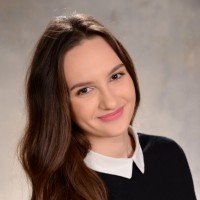
Sara F.
Floor Supervisor ZH
In the beginning, I couldn’t speak. Now I notice that I can speak German without stopping for several sentences and say the whole thing. That’s when I see, oh my, this really works.
It was so hard for me to understand natural German. Now I can hear the spaces between words, recognize vocabulary, and understand grammar better. Colleagues tell me, you have only been here a few months and you already speak German. At work, I can now basically speak with everyone.
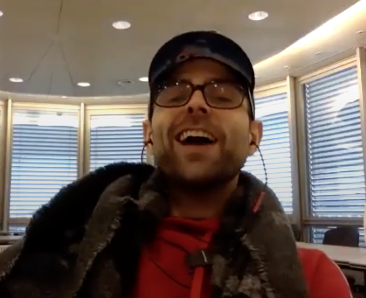
Marcos E.P.
Headchef ZH
For 5 years I wasn't able to speak German, now after only 40 hours I started to have conversation and speak German
I had a lot of problems here in Zürich because I couldn't speak German. Suddenly I was offered a position as a Headchef, but only if I was able to speak German. Fast. And now I can.
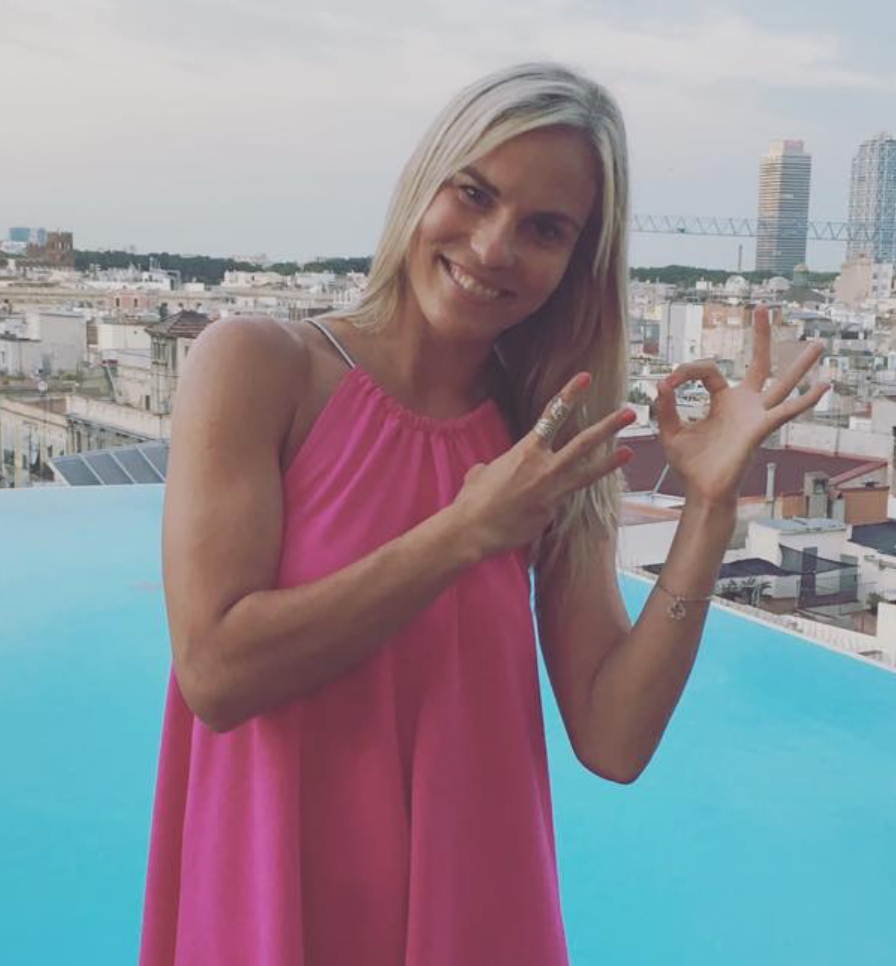
Zuzana D.
Physiotherapist KLU
I just received my Goethe B2 certificate, passed a job interview entirely in German, and got the job. I’m so happy I can finally speak German.
I was so worried about the Goethe exam and speaking German at work. I've done typical classes and Duolingo. It helped a bit, but I was still so slow. Now, I just received my Goethe certificate and even passed a job interview in German. I got my dream job. I’m so happy I can finally speak German.
faq
90 days, personalised plan to fit your life schedule because we build this plan around YOUR life.
Live Online. One on One per Zoom. Teachers are there only for you, to maximise progress of each minute of each session.
Because you learn exactly like you learned your native language. We use visuals to engage your visual memory combined with hearing repetitions in spaced out manner without any anxiety because in first weeks we ask you close-ended questions only. Multiple option questions are important because they lower the anxiety of the student and help him/her to start talking from Day 1 and keep receiving Input from the teacher. We can keep pushing your German comfort zone in real time, something that most programs, radio, TV, or Duolingo can't do.
No. For German we only use native speakers. But these native teachers (unlike in traditional schools) are trained in the C.I. method that many polyglots use to be conversational in a new language in 3 months. It's the exact method that helped me to learn 7 languages. In fact, the method works so well that many of my students learn even faster than I did... simply because when I was acquiring new languages I did it through trial and error and now after almost a decade I can separate what works (from what doesn't) and deliver it to them.
Intensive program is normally 85.00 CHF/session, but for this Swiss National Day it's 50% OFF for 7 people
50% OFF is give and take, meaning... it's in exchange for being able to feature you on our website as one of our successful case studies.
We're a small team and each teacher can only teach maximum 2-3 different students on any day. These sessions take big mental toll on them as they do lots of constant explaining in context and basically talk to you like to a baby 1 on 1. We have currently 7 slots.
It's hard, but it works better than anything I've seen. Actually, it's hard and super-easy. The activity is very hard for the teachers, but easy for the students. The consistency is easy for the teachers (as it's their job), but hard on the students. We do our job of expanding your spoken German comfort zone and making you gradually acquire more language, which compounds to spoken German flow. But this is only possible with real consistency on student's part. We did the hard job of looking at science and research... and figuring out how to give you the ONE ACTIVITY responsible for 99% of flow and do it ONLINE, so you can do it from the comfort of your home. All you have to do is show up for 90 days and it will change your life. Not 3 years, but 90 days.
NO. It will be appended to the end of the current month. However, once established schedule... we would like to keep it at least 80% of the time. It means that we're extremely flexible for you, but hope that you won't be changing the schedule each week.
YES
B1 or B2 SPOKEN level (It depends if you start at A1 or A2)
After the program you'll have full conversational fluency. You'll SPEAK German, you'll think in German, you'll have that initial German thinking brain of around 6 year old kid. You won't have extremely sophisticated ways of speaking. You also won't have 10 synonyms for each word, but you'll have enough to confidently speak in every day German about everyday topics FREELY, withhout the need to translate or rehearse some phrases. You'll enjoy speaking with your neighbors, work colleagues, Swiss freinds, etc. and therefore continue acquiring more and more German in real conversations.
Generally YES. The reason why they do that is because your level is not yet at sufficient level and nobody wants to wait minutes. Even when someone would talk to in your native language slow... you probably wouldn't have patience for it. It's why famous polyglot Steve Kauffman says we can't treat strangers as language teachers or conversation partners until we reach that upper B1 or B2 SPOKEN level.
It's completely new and different, we can demonstrate it on zoom. It is very unlikely that you had access to this type of class, for prolonged period, from real live human beings. Effective and fast language acquisition is very complex and nuanced topic. What we do to naked eye might seem simplistic, but usually that person just doesn't understand compounding effect, which doesn't work wonders only in finances, but also in language learning. When you're continually exposed to the most frequent German language in application and in context from real live humans which adapt in real time for your current level and continually push your comfort zone without making you feel stupid.
Automated content can't do that. Youtube videos can't. TV can't. Radio can't. Traditional grammar methods can't. Duolingo can't. Native Skype, Italki, or Preply "teachers" most likely can't because why would they research how learning German works if they already speak it. Natives can't even remember how they learned their native language. There are some exceptions, but for the most part natives are just guessing how you should learn German... because they were never in your shoes. All of these things work a bit, but unfortunately just slow enough for most people to convince themselves that languages are hard, or they have no talent, or are too old. I know because I used to believe all of those things.
About Peter Drotar
After studying German at school for 8 years, I still couldn’t speak it! When I arrived in Zurich I couldn’t mix with the locals. I absolutely needed to learn the language so that I didn’t feel like an outsider.
My shame drove me to search endlessly for a better way of learning. Believe me, learning languages was not easy for me at the beginning… I struggled! Eventually I discovered what I had suspected all along: the problem was not me, but the methods I was using.
Once I discovered what’s really important for communication, (you’ll be amazed at how much of what is normally taught actually gets in the way of communication) and how to best use the mind for rapid learning, I acquired not only German, but Spanish, French, Portuguese, Italian and Russian too!
I am now a very successful multi-language speaker. But the main reason I have a lot to offer you is simply this: I have been where you are now. If you have ever had a tough time learning a language, we can help – and we are here for you!
Contact us to see how the process works
We provide custom designed lesson programs, designed around your busy schedule, with live, one on one per Zoom classes to ensure that you'll reach conversational fluency in German, in 120 learning days.
Transform your spoken German in under 120 learning days. Not perfect but able to Think in German & Speak with Flow.
SEe OUR STUDENTS
ACTUALLY THINK & SPEAK GERMAN
Check out the Feedback from our students
Copyright 2023 Fluency Sprint Privacy